May 20, 2026
Konvoy Is Back: What Two Events Have Taught Us and What Konvoy 3 Is About to Prove
Philippine MMA has changed dramatically. Here's how the amateur scene has evolved since 2024 — and the role local promotions like Konvoy are playing in that growth.
The lights dimmed at the Arctic Room of Waterfront Cebu City Hotel and Casino on a humid November night in 2025. In the center of the venue sat an eight-sided cage that had never hosted a professional MMA event before. Around it, hundreds of fight fans waited to see what this new promotion called Konvoy could deliver.
By the end of the night, some would leave talking about the knockouts they witnessed. Others would remember the production hiccups and the pacing issues that stretched the card past midnight.
That was Konvoy 1 — ambitious, imperfect, and undeniably real. Seven months later, as Konvoy prepares for its third Philippine event, those growing pains feel like ancient history. The South Korean-founded promotion has learned hard lessons, made significant adjustments, and is ready to prove that Konvoy isn’t just another regional MMA experiment.
Here’s what makes Konvoy different in the Philippine combat sports landscape — it’s a promotion that bridges Korean investment with Filipino fighting spirit, creating a platform for fighters who fall between the amateur and elite professional levels. As Konvoy 3 approaches in 2026, the question isn’t whether the promotion can survive, but whether it can become the regional force it was designed to be.
How Konvoy Started
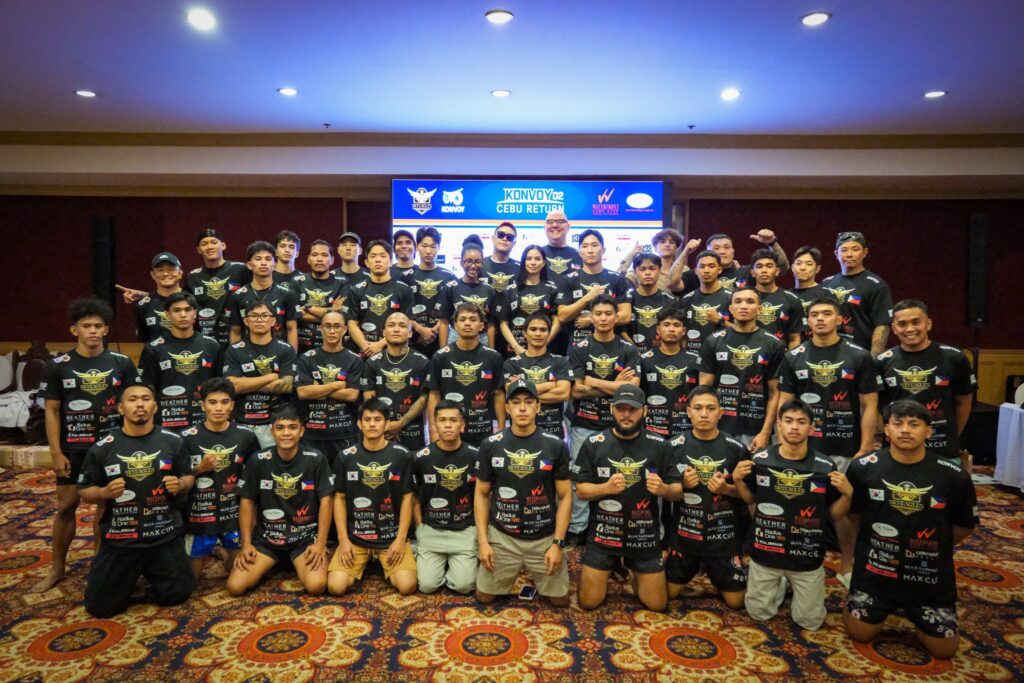
The story begins in Seoul, where a group of Korean MMA investors saw an opportunity that others had missed. While most international promotions focused on Manila or ignored the Philippines entirely, they recognized that Cebu’s growing martial arts community was ready for professional-level competition. The city had the gyms. The fighters. The audience. It just needed the right platform.
Konvoy’s founders spent months studying the regional MMA landscape before committing to the Philippines. They saw fighters training seriously but lacking opportunities to compete at a professional level. They noticed gyms producing skilled athletes who had nowhere to showcase their abilities between amateur tournaments and the rare major promotion events. The gap was obvious, and they decided to fill it.
The decision to base operations in Cebu rather than Manila was deliberate. Cebu offered lower operational costs, a more manageable venue landscape, and a tight-knit fighting community where word-of-mouth marketing actually worked. The founders believed they could build something authentic here — a promotion that grew organically rather than forcing its way into an oversaturated market.
When Konvoy announced its inaugural Philippine event in 2025, the local MMA community reacted with cautious optimism. New promotions launched regularly in the region, but most disappeared after one or two events. The question wasn’t whether Konvoy could put on a show — it was whether they could build something lasting.
Konvoy 1: What Happened and What We Learned
November 2025’s Konvoy 1 was a masterclass in learning on the job. The Arctic Room provided an intimate setting that put fans close to the action, but the venue’s acoustics made announcements difficult to hear. The fight card delivered genuine excitement, with several finishes that had the crowd on their feet, but pacing issues stretched what should’ve been a three-hour event to nearly five hours.
The production quality showed promise but revealed inexperience. Camera angles captured the action well during fights, but transitions between bouts felt clunky. The lighting worked for the main card but created visibility issues during preliminary fights. Most importantly, the event ran significantly over schedule, testing the patience of both fighters and fans who had work or school the next day.
Fighter feedback was mixed but constructive. Competitors appreciated the professional treatment and fair purses, but several noted that communication about fight times and event logistics could improve. Cornermen complained about limited cage-side access, while fighters praised the medical staff and referee quality.
Here’s the thing: despite these challenges, Konvoy 1 achieved its primary goal — proving there was demand for professional MMA in Cebu. Ticket sales exceeded expectations, social media engagement was strong, and local media coverage was extensive. The event established Konvoy as a legitimate presence in the regional scene, even if it wasn’t yet a polished one.
Konvoy 2: The Improvement

Four months later, Konvoy 2 showcased a promotion that had listened to feedback and made meaningful changes. The event timeline was tightened, with fights starting and ending closer to scheduled times. Production values improved noticeably, with smoother transitions and better audio quality throughout the venue.
Most importantly? The overall experience felt more professional without losing the intimate atmosphere that made Konvoy 1 special.
The fight card for Konvoy 2 reflected lessons learned about matchmaking and fighter selection. Instead of booking as many local fighters as possible, the promotion focused on competitive matchups that would deliver exciting fights. The result was a more cohesive event where each bout felt meaningful rather than feeling like filler between main card fights.
Fan experience improvements were evident from the moment doors opened. Entry procedures were streamlined, concession stands were better stocked, and venue logistics flowed more smoothly. The Arctic Room felt more like a professional fight venue and less like a hotel conference room that happened to have a cage in it. Small details like better signage and improved seating arrangements contributed to a more polished overall presentation.
Fighter treatment reached another level at Konvoy 2, with improved communication, clearer timelines, and better backstage facilities. Several fighters who competed on both cards noted the differences immediately. The promotion had evolved from a promising startup to a legitimate regional platform in just six months, setting expectations high for what Konvoy 3 might deliver.
Key Lessons from Two Events
Two events taught Konvoy valuable lessons about operating in the Philippine MMA market. The most important discovery was that Cebu fight fans are sophisticated consumers who appreciate quality production but forgive growing pains if they see genuine effort to improve. They want exciting fights first, but they also want an experience that respects their time and money.
Venue selection and management emerged as critical success factors. The Arctic Room worked well for intimate events, but Konvoy learned that even smaller venues require careful planning around acoustics, lighting, and crowd flow. The promotion discovered that Filipino fight fans create incredible atmosphere when properly engaged, but poor logistics can kill that energy quickly. Getting the basics right became a prerequisite for everything else.
Fighter development became a core focus after both events. Konvoy realized that its role wasn’t just to promote fights, but to help build the regional MMA ecosystem. This meant working with local gyms, providing feedback to fighters, and creating pathways for improvement. The promotion began seeing itself as a development platform rather than just an event organizer.
Marketing and community engagement required a different approach than anticipated. Traditional advertising had limited impact, but grassroots engagement through gyms and social media proved highly effective. Cebu’s MMA community was small enough that personal relationships mattered more than broad marketing campaigns. Word-of-mouth recommendations from respected gym owners or veteran fighters carried more weight than any paid advertisement.
What Konvoy 3 Is About to Prove in 2026

Konvoy 3 represents more than just another fight card — it’s the promotion’s statement that it belongs in the permanent landscape of Philippine MMA. After two events of learning and adjusting, Konvoy is ready to showcase what a truly professional regional promotion can look like.
The stakes are higher because the expectations are higher. And that’s exactly where Konvoy wants to be.
The upcoming event will feature the promotion’s most competitive fight card yet, with several bouts that could legitimately headline smaller shows. Konvoy has spent months developing relationships with gyms across Cebu and surrounding regions, giving them access to fighters who weren’t available for earlier events. The matchmaking reflects a deeper understanding of what makes compelling fights and what resonates with local audiences.
Production quality will reach new levels at Konvoy 3, with improvements in every aspect of the viewing experience. Enhanced lighting, better audio systems, and more sophisticated camera work will create a broadcast-quality presentation that rivals established promotions. These upgrades represent significant investment in the promotion’s future and confidence that the Philippine market can support higher production values.
The event will also demonstrate Konvoy’s evolution from startup to established regional player. Partnerships with local businesses, improved fighter amenities, and streamlined operations show a promotion that has moved beyond survival mode into growth mode. Konvoy 3 isn’t about proving the concept anymore — it’s about proving the execution.
How to Be Part of Konvoy 3

Tickets for Konvoy 3 will go on sale soon through official channels, with early bird pricing available for fans who want to secure their spots for what promises to be the promotion’s biggest event yet. VIP packages will include meet-and-greet opportunities with fighters and premium seating that puts you ringside for every moment of action.
Fighters interested in competing on future Konvoy cards can submit applications through the promotion’s official website, including recent fight footage and training background. The promotion particularly encourages applications from fighters with amateur experience who are ready to take the next step in their careers. Konvoy continues to serve as a bridge between amateur competition and higher levels of professional MMA.
Follow Konvoy on social media @konvoyfront for the latest updates on fight announcements, ticket sales, and behind-the-scenes content leading up to the event. The promotion’s commitment to transparency means fans get real insight into the preparation and planning that goes into each show, making the experience more engaging for everyone involved in the Konvoy community.


.svg)
.svg)